
How To Transition Potty Training from Recherche Labs to Your Home
A major pillar of our Puppy Training Institute is House Training, which includes potty training, crate training, stair training, jump training and chew training. We have different levels of house training for every puppy program. We have a detailed list of goals found on our Puppy Training Institute page. Below are the potty training goals for each level:
- Puppy Academy: Potty Training- 1 hour; Crate Training- 4-5 hours at night.
- Canine College: Potty Training- 2 hours; Crate Training-5-6 hours at night.
- Master’s Program: Potty Training- 3 hours: Crate Training- 6-7 hours at night.
- Doggy Doctorate: Potty Training- 4 hours: Crate Training- 7-8 hours at night
- Doggy Double Doctorate: Potty Training- 5-6 hours: Crate Training- 10+ hours at night.
Please realize that just because they are fully potty trained here doesn’t mean they will never have an accident in your house. It’s impossible for any trainer to fully prepare every puppy for every family, every home and every yard. This is why we want to give you these important tips so you can quickly transition your pup from our home to yours.
Below is the playbook on how we potty train your pup so it’s very important to see what we do so that you can do the exact same thing. Please remember this…the closer you pay attention to these points the faster the transition for your pup’s potty training. If you run through this and don’t follow the simple advice we give you then your pup will most likely have potty accidents in your house.
Potty training is 1 step forward and 3 steps back. You cannot afford to go one day without following through. If you wait until you have problems, you may have weeks of work ahead of you. Even if you purchased a 12+ month old pup, you still have to follow these steps. The older your pup is, the faster they will get though the transition, typically because they can physically hold their bathroom longer and they are more intelligent to learn (which is one reason many buyers choose a longer training program). The younger pups will have a longer transition time typically.
Also, please realize that even if your pup is “signaling” to potty here in our home, that doesn’t mean they will immediately start signaling to go in your home. It takes time for them to learn where to potty at your place. It takes time to build a relationship with you. As you follow our steps, they will eventually start signaling to you that they need to go potty outside. Signaling could be them going to your back door, or sitting in front of you, or even barking to go outside.
As you learn your pup, you will start getting his signals but don’t expect it even from an older trained pup for several weeks. Below is our advice for every puppy when it comes to keeping your puppy house trained and transferring all the hours of training we have done to your home.
Never Trust Your Puppy!
First and most importantly, do not trust your puppy. Your dog spends two-thirds of their training hours house training each individual puppy. Nevertheless, we don’t trust them. We watch them diligently at all times in the house. We block off areas in our house so they are not able to wander off out of view.
The biggest mistake families make is allowing their puppy to wander freely and are shocked to find an “accident” in the bedroom or a shoe chewed up in the laundry room. Again, do not trust them!
Even if they don’t have a problem with pottying in the house, they most likely will be going through a chewing/destructive phase from around 5-12 months of age. Never leave a puppy alone without supervision. If you are not able to watch your puppy carefully, then you need to crate your pup or put your pup outside.
Catch Your Puppy “In the Act!”
The greatest success you can have is for your puppy to cry, whine, bark or even ring a bell to use the restroom outside. The goal of every dog owner is to train your puppy to communicate to you that they need to use the restroom outside.
The second greatest success may surprise you. Some think that never giving your puppy the opportunity to potty inside is the key. We don’t believe that. We believe in watching your puppy carefully and giving your puppy the chance to communicate. If they don’t communicate and squat to go, then there’s a golden opportunity to verbally correct your puppy. Whenever we see a puppy start doing the pace back and forth or the circling, we wait and get ready to pounce. At the moment they start squatting, we jump up and strongly correct verbally with a “Bad!” or “No!” Depending on how close they are we may also clap our hands and stomp our feet as we make our way to them.
The severity of our correction depends on the sensitivity of our puppy (typically the younger the pup, the more sensitive). Some pups are very sensitive and just need a soft “Uh, Uh!” to stop immediately. Some pups are just a little more strong-willed and it takes a very loud “NO!” for them to stop their potty and be taken outside.
Once they potty outside we praise them and reward them if we have a treat available. We recommend having a “Lickety Stik” or a small bag of treats to give to your pup by your door. If you are consistent, your pup will learn that going inside is wrong and going outside is good.
Now the following is VERY important: If you find an “accident” on the floor, then it means you have failed and not the puppy. If a puppy is able to potty out of sight and you were not able to catch them, then you were either too distracted, too busy or didn’t block them off. Always make sure they are being watched and if they have an accident that you are able to correct them in that same moment.
If you discover an accident then tell yourself “That is my fault.” It’s not your puppy’s fault…it’s your fault. Never correct a puppy after the fact. Until they get older, they have a very short memory and can’t remember and thus understand why you are yelling at them. Also, NEVER “rub your dog’s nose in it.” Puppies can be very sensitive and smart. They want to please you. If you physically correct them, you are simply going to make your pup afraid of you. You will lose their trust and continued training will be hampered.
Be Mindful of Pitfalls for Your Puppy!
Recherche Kennels spot trains every puppy and we never allow our pups to use the restroom on hard surfaces. We train our pups to use the restroom only on pine shavings, grass or dirt. They are trained to do this even before they are weaned.
On the other hand, there are certain areas of a home that are usually pitfalls for puppies. These are areas that appear very similar to grass or dirt. Areas they tend to favor for accidents include carpets, rugs, doggy beds, etc… Whenever they are in these areas they may believe they are on a potty spot and be more prone to potty. Watch them carefully in these areas.
If your puppy does have an accident, clean it up very well to eliminate the smell by using a carpet cleaner like Nature’s Miracle Urine Destroyer. Dogs have an incredible sense of smell and if they can still smell residue on the spot where they pottied, they will be much more prone to potty there again and again. If they are constantly pottying on the same spot, another helpful tactic you can try is to feed them on the potty spot. They naturally do not want to sleep or eat where they potty so that can help discourage them.
Know Your Pup’s “Schedule!”
Remember that a puppy will need to use the restroom after they wake up in the morning, after naps, after playing hard and after eating. During the day, a 12-week old puppy (Puppy Academy) usually will not hold their restroom for longer than 1-2 hours at a time. A 16-week old pup (Canine College) can hold it for around 2-3 hours and a 6-month-old (Doggy Doctorate) can hold it around 3-4 hours a day. If you keep a consistent schedule with feeding and pottying them, they will be much faster at mastering potty training at your home.
We feed our dogs first thing in the morning around 8 am and again around 2-3 pm. We feed them around 1 ½ cups of food at each sitting. If they are having problems with constant urination then perhaps it would help to monitor their water intake. Some puppies love water….I mean LOVE water. I had a puppy that drank and drank and drank all day long. You can just imagine how many times we had to potty that dog! It seemed that every 30-60 minutes we had to let this pup out to potty!
In the Beginning…
The beginning phase, just after arriving home, is crucial. Make sure you teach them where to potty. Take them to the exact same spot to potty every time. Take your pup out the exact same door every time. Use the same keyword when pottying your puppy (like “Let’s Go” or “Potty”). Treat your pup when they potty where they are supposed to. Buy some pine shavings and sprinkle them around where you want your pup to use the restroom.
Some families have even purchased bells or the Tell Bell and put them on the door. You can teach your dog to ring the bells or Tell Bell every time they need to use the restroom. There are many great YouTube video tutorials on doing this. One of them can be found here: http://www.youtube.com/watch?v=rQTTm5YeqEI.
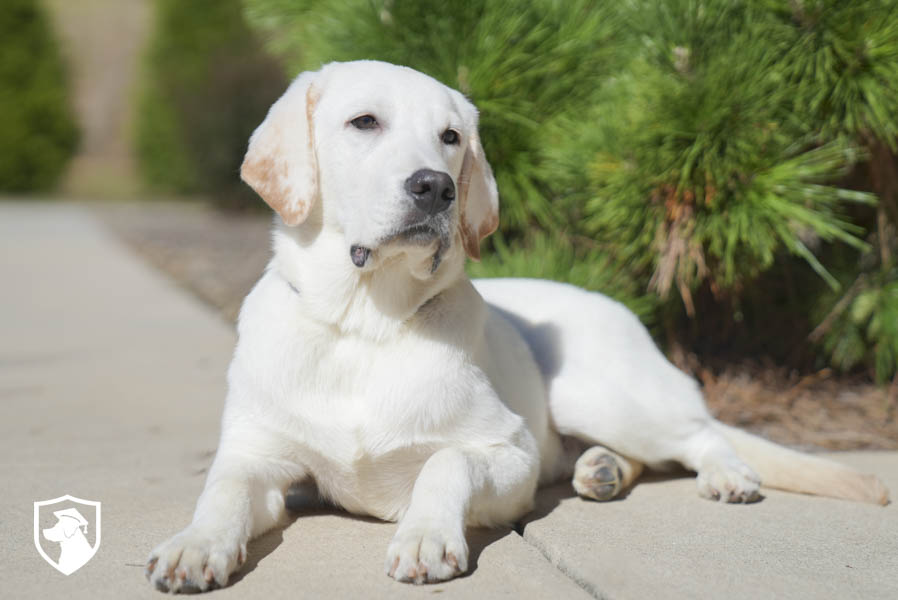
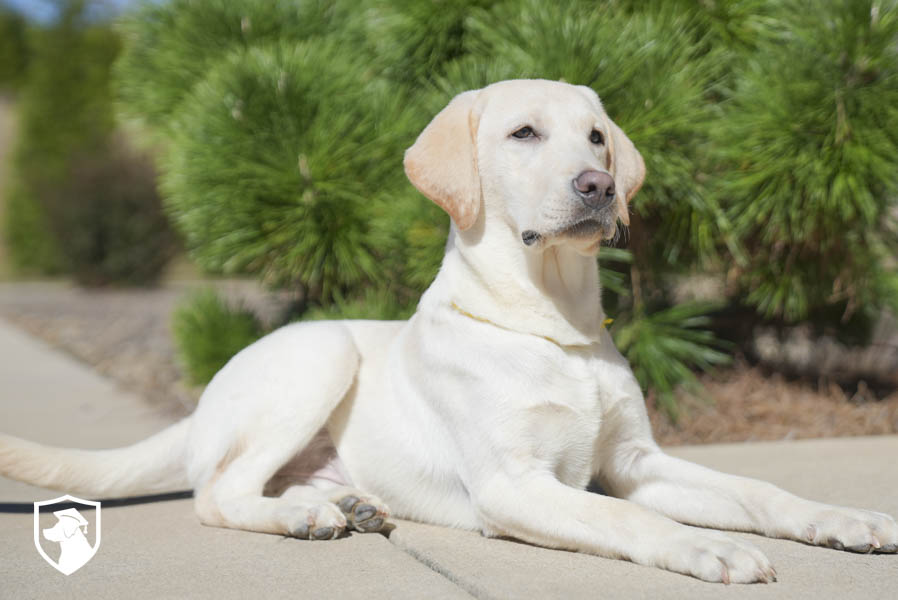
 The greatest lesson we can teach you is to learn what a healthy SIZE looks and feels like for your dog. Notice that I don’t say “Weight.” Weight is deceiving, it can change. As a puppy grows it changes all the time. You must be able to feel a dog’s side to determine if your dog is at a healthy size or not. You have to look THROUGH their coat and feel the actual fat that they have. Your dog could look great to you, but after further investigation could be too thin or too fat.
 The first myth that we want to debunk is that there are major personality differences between males and females. Some say that males are more loving or that females are more laid back. That’s just not true. We have never noticed a trend in which a gender shows themselves to be more of a certain personality trait. We have trained so many puppies looking for subtle personality differences and have come to the conclusion that there is no definite personality difference between the genders.
 average male is 75-80 lbs. A small female can be as small as 45 lbs, and the largest females are rarely larger than 70 lbs (not overweight). A small male will be around 60 lbs, and larger males can reach 85 lbs.